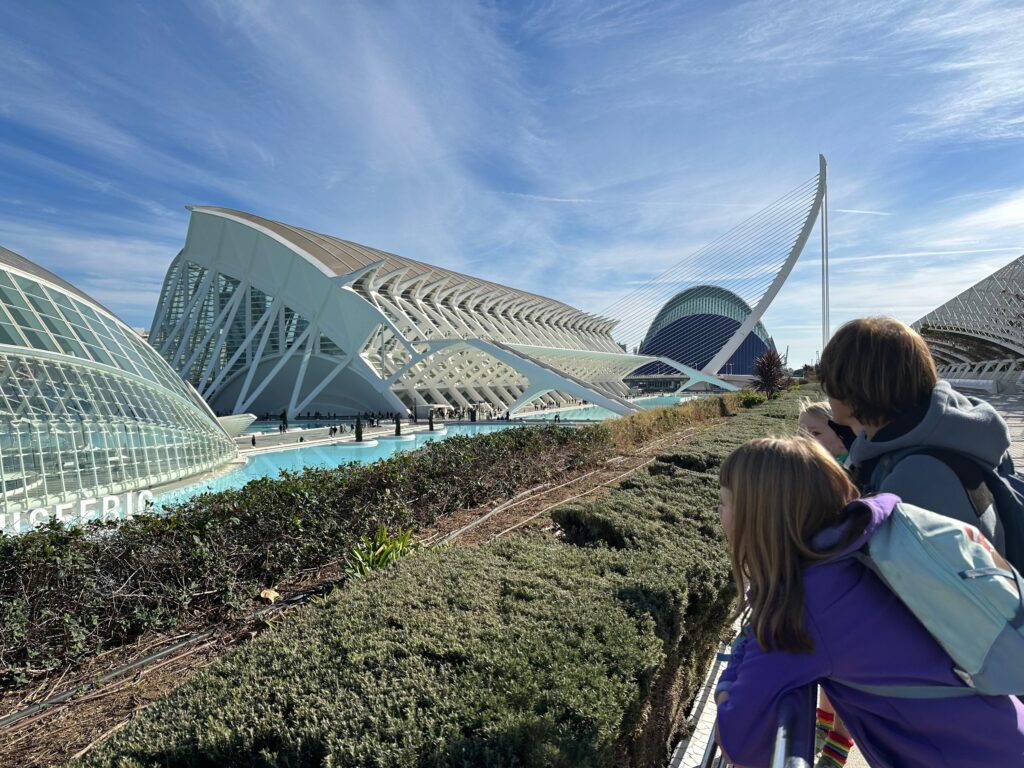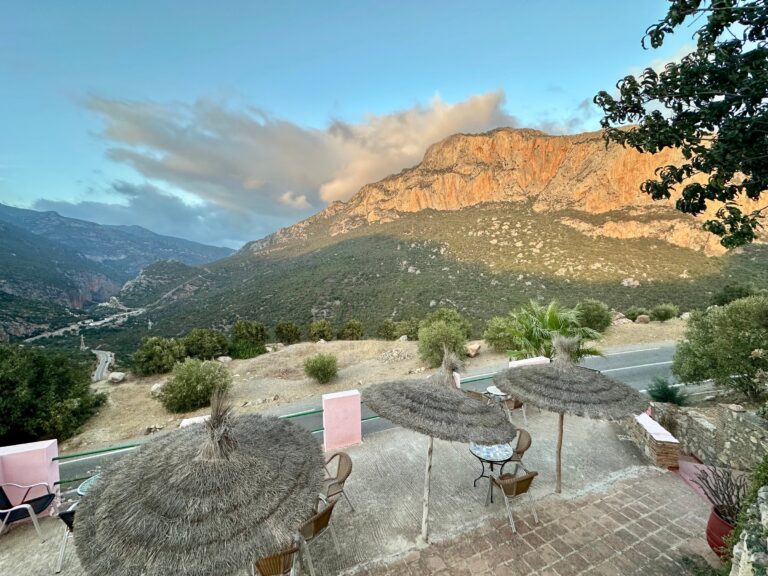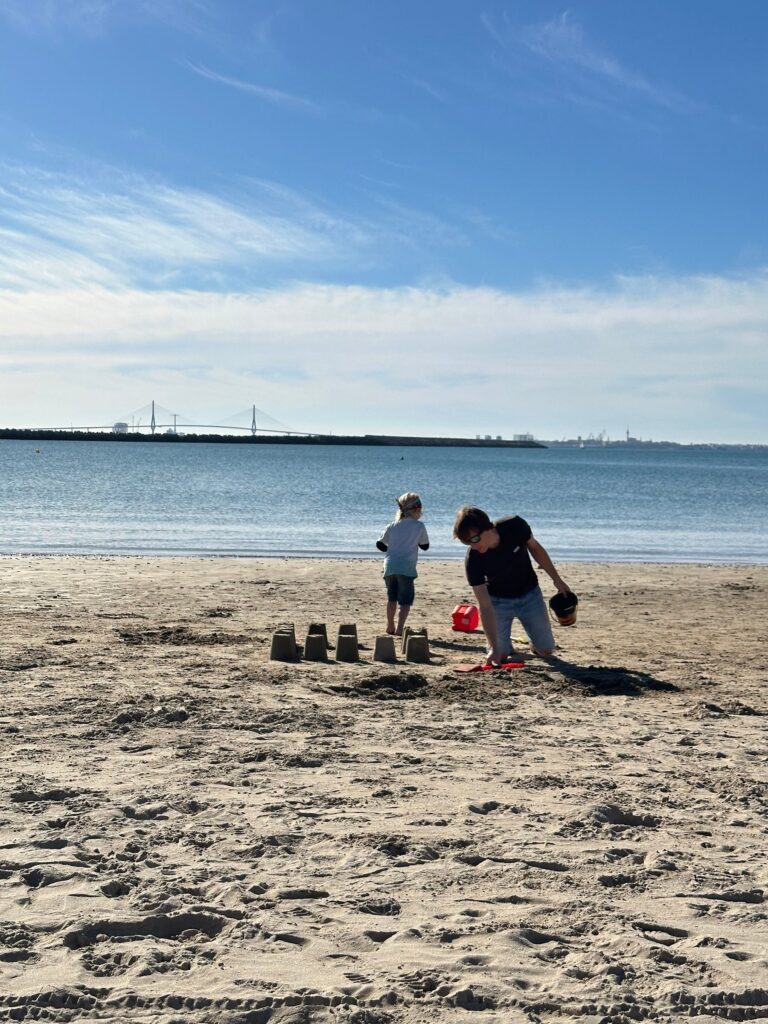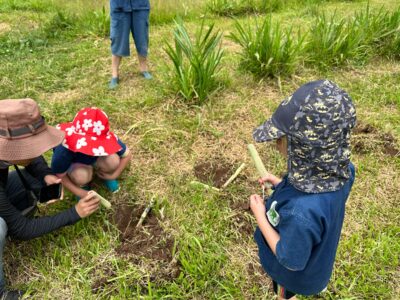


When I look at our lifestyle now, compared to two years ago when we first made the decision to home educate, it is unrecognisable. I am sitting here writing this in a café in Asilah, a coastal town in Morocco. Whilst I write, one child is listening to an audiobook and beading a necklace, whilst the other is doing their online Spanish lesson with their tutor. Jimmy has his head buried in some software development work, using an AI tool to make efficiency savings and streamline his work. We have had a walk along the beach at sunrise, a wholesome breakfast at our apartment made from locally grown, whole food ingredients on our outside terrace, and now we are enjoying Moroccan breads and coffee. The world feels good, full of opportunity. We are together as a family, enjoying quality time whilst having the space to progress our own interests and ideas. The kids are calm, content and engaged.
The Reality of School Morning Chaos
On an equivalent Tuesday morning in Dorset, back home when we owned a house, embraced school life and ran a business, the feeling was very different. The school mornings always felt manic, less focused on enjoying those precious moments together and more focused on rushing through the exercise of getting washed, dressed and fed so we would get to the school gates on time. Cortisol levels always felt high, both mine and theirs. I would have to continuously barter and cajole the kids into leaving their toys behind in order to perform the activities quickly enough.
TV would be used as a placater, distracting them from the impending separation whilst I brushed their hair and blindly fed them enough breakfast to fuel them for the day. I would run around making lunch boxes, hastily ironing uniforms that had been overlooked the night before, feeding the cat, packing bags and tidying the house as I went. We would then pile into the car and drive to school, half distracted by their cries of not wanting to go in, not wanting to say goodbye. By the time they had reached their classrooms and dealt with the trauma of being peeled away from me in tears, only to be confronted by a full sensory onslaught of the classroom, it is hard to see how they were in a calm enough state to learn anything.
By the time they had reached their classrooms and dealt with the trauma of being peeled away from me in tears, only to be confronted by a full sensory onslaught of the classroom, it is hard to see how they were in a calm enough state to learn anything.
Wrestling with Guilt and Intuition
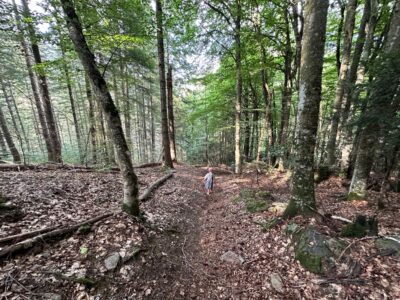
In this lifestyle, as an empathic creature, I was completely overwhelmed. I know that I would turn and walk away from them at the gates, physically and emotionally exhausted. I would escape for a walk in the woods in an attempt to re-regulate, letting the trees soothe my guilty soul. Guilt at dropping them in, leaving them scared and overwhelmed, and ignoring my gut instinct that said it was wrong.
My old people-pleasing instincts kept me fighting inner turmoil: the need to please their teachers and conform to society’s expectations that children need to be in school, versus my intuition saying it wasn’t what was best for our sensitive children. The strong subconscious programming that had occurred from an early age won every time, to my shame. I wanted to be the mama bear and say no, to protect my children from what I knew to be damaging for them, but I just didn’t know how. I didn’t know, or understand then, what the alternative could be.
As much as I wanted to make the evenings when they got home quality family time, our collective exhaustion from this continual emotional rollercoaster meant that the kids would drift back to the TV to deal with their overwhelm whilst I tried to conjure something together for dinner. We might manage a puzzle or a board game together if the weather prevented outdoor play, but it often felt forced rather than genuine. I was not able to manifest the lifestyle that I wanted, for me or for the kids. I instinctively felt that despite the good learning that they were doing at school, the values that they were subconsciously getting from the whole exercise did not fit with what we wanted to be showcasing. We were all sorely out of alignment.
Breaking Free from Expected Paths
The life that we are living now feels a little surreal, dreamlike, in comparison. It has its ups and downs like everything, but I am grateful every day for the opportunity to live it. It feels like the life I imagined other people had, but couldn’t ever picture myself living. I would talk to people who travelled, who lived abroad, feeling a little jealous of their freedom by acknowledging to myself how much the idea appealed to me. But it always felt dangerous to consider it, like I somehow “wasn’t allowed” to do it.
That it didn’t fit with what was expected of me and how I was meant to behave as a mother of two small children. It was as though that life was meant for other people—for the young, single or retired—but it somehow wasn’t for me. It was only when someone confronted me with the idea, suggested that some warmth and sunlight may help the inflammation in my body, that I allowed myself to consider what the alternative could be…that maybe there was another way.
It is often more possible than you think to create the life that feels right to you. But it isn’t quick or easy, from my experience.
The Journey of Gradual Transformation
When I look back over the last two years, we have come a long way. The road has been extremely bumpy, and we are not yet at our destination, but we have seen some amazing scenery along the way. I know myself better now than ever before, and in learning about myself I have come to understand my husband and children more. Our communication is better, and we are learning when to lean in for support and when space is the answer. Through this I believe we value each other, not taking the others for granted but valuing the quality time we get to spend together. It is often easy to overlook how difficult it has been at times, making the decisions and sacrifices we have made along the way to make the current reality a possibility. But as someone who very much subscribes to the saying “you only regret the things in life that you did not do, not the things that you did”, I do not regret any of it.
It is often more possible than you think to create the life that feels right to you. But it isn’t quick or easy, from my experience. In this fast-paced culture we are often used to getting instant results, so if we can’t see an immediate way out we give up. But from looking back on how we have got here, it has been one tentative step in front of the other, not knowing where we were going but having the faith that it would work out OK. Choosing to home educate was the first decision of many that prompted us to take an honest look at our lives and re-evaluate what was truly important to us. We chose to prioritise and re-align with our value system, once we had worked out what that was, to ensure we could make it work for all four of us.
Practical Realities of Home Education
It is not necessary to turn your life upside down to choose to home educate, but it does force you to look at your life through a new lens. It asks you to assess your financial situation, your home situation, the support you have and your job requirements to see how it is going to work for your family. What changes or adjustments need to be made to fit 24/7 childcare back into your lives? Where are you going to get the time and energy from to drive the learning process for your children, and how are you going to adapt your home situation to accommodate it? You are also forced to consider whether you are sharing this burden, or tackling it alone.
Through this series of articles I will explore some of our experiences, what we have taken into consideration and how we have tackled the decisions that we have made to make this life possible. We made a promise to the children that we would keep them at home with us, to nurture them and curate their learning in a different way, and so it was up to us to fulfil this. I hope that our experience may help you to view your own life in a new way.
Frequently Asked Questions
We found that our children’s emotional responses to traditional school were the biggest indicator. If your child is consistently stressed, overwhelmed, or resistant to school despite good teaching, it might be worth considering whether the environment itself is the issue. We noticed our children were spending so much energy just coping with the school environment that they had little left for actual learning.
Yes, but it requires careful planning and gradual steps. We didn’t transform our lives overnight – it took two years of tentative decisions, reassessing our priorities, and making practical adjustments to our work, finances, and living situation. The key is taking it one step at a time and having faith that it will work out as you go.
We had to honestly assess our financial situation, work requirements, home setup, and support systems. The biggest questions were: how can we fit 24/7 childcare back into our lives, where will we get the time and energy to drive our children’s learning, and are we tackling this together or alone? These practical considerations helped us make the necessary adjustments to make home education work for our family.