
We moved into our house in rural Dorset in September 2019, but it was in March of that year that we first looked round and fell in love with it. The house, on paper, didn’t really make sense. It was on a busy main road (not ideal with kids), in a small village that had no pub or shop. The property was also a chalet bungalow, which we weren’t looking for, but it left us with a feeling. A feeling of promise, and expectation. And we were still mutually experiencing it a week later, when our offer was accepted.
As I reflect now, I can see that the decision to move there was wrong for so many reasons, coming from a place of grief rather than intuition and clear thinking. But that is the benefit of hindsight. There is no way we could have known that at the time. Like Nora Seed in “The Midnight Library”, there are many parallel lives that we can possibly live, and each outcome is dependent on the decisions we take in the moment. That section of our lives, living in and subsequently selling that house, was bittersweet, but without those experiences we wouldn’t be where we are now.
Decisions Born from Grief
That March, we were riding the wave of recovery from an ectopic pregnancy which had resulted in emergency surgery, and from which I was still recovering physically and emotionally on top of a miscarriage four months prior. We had one beautiful little girl and desperately wanted to give her a sibling, but didn’t know if it would ever happen.
The loss had felt tremendous: the physical loss of having a part of my reproductive system removed to stem the blood loss which could have cost me my life; the migraines that had been so unmanageable throughout three pregnancies and led to disciplinary procedures at work due to time off sick; the loss of two babies and the lost possibilities that represented. We mourned the part of Jimmy and me that would never breathe life into this world long enough to hear their name being called, and the fear that comes with trying again when you know you only have one fallopian tube left and a greater risk of having another ectopic pregnancy. We should have been processing this, and healing gently, but instead we did what we only knew how, and moved on to other projects to numb the pain.
We should have been processing this, and healing gently, but instead we did what we only knew how, and moved on to other projects to numb the pain.
We were also feeling the pressure of societal expectations at this time. Maybe we imagined it, or put it on ourselves, but from the moment that we moved into our previous house, there was always the expectation that we would one day upsize. Both of our parents had done incredibly well from the property boom of their generation, and so had impressed upon us the financial benefits of growing our money by stretching on the mortgage and working hard to pay it off. This model had worked for us with our previous two houses, childfree with two modest incomes, and an uplift in value at the point of selling. We had increased our equity each time.
With the childfree time we had to complete the work, the model was a reasonable one. So when it became a painful possibility that we may never have another child, we decided that the right thing to do was upsize. Jimmy’s IT business was performing well and so we could prove to the bank that we could afford a bigger mortgage. We felt guilty that our daughter had to live through visiting her mum in hospital as a 2-year-old, so we wanted to provide the best for her, just as our parents had for us.
The Illusion of the Property Dream
We did not fully appreciate what we were taking on when we bought the house. I am not sure anyone does with the shambolic property-buying process in the UK. It’s one of the biggest financial decisions that we ever make, and yet seemingly the one that we put such little thought and planning into. You only ever visit the house twice, maybe three times, before happily laying down hundreds of thousands on the purchase. You settle for a middle-of-the-road survey, where somebody skims the surface of possible issues but never digs into any real problems, so you may as well be going in blind.
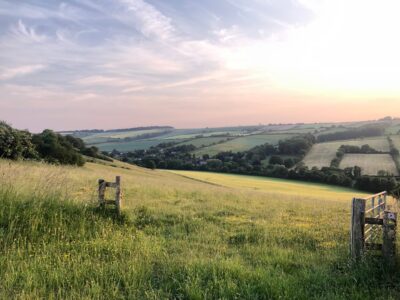
We were drawn in by the endless opportunities that the house and the extensive plot would afford us. We dreamed of garden office rooms, open-plan living, cinema rooms, space for our daughter as a teenager to separate off to, and justified it all with the possibility of additional income from a “granny annexe”. We were planning for 10-20 years down the line, not for what we needed as a small family of three at that point in time. But the far-reaching views of the valley, and the beautiful garden, meant we forgot the practical aspects and dreamed big dreams.
We were planning for 10-20 years down the line, not for what we needed as a small family of three at that point in time.
New Life in Uncertain Times
We were blessed to fall pregnant with our son whilst the house sale was still proceeding, and so when we moved in, I was already 18 weeks pregnant. I had already received multiple scans to rule out ectopic early on, due to pain in my surgical site, and a return of chronic migraines. I was exhausted. But nonetheless we threw ourselves into house renovations to make the place habitable. I remember sitting out on the driveway sanding kitchen cupboards, and painting them a vivid turquoise, in an attempt to make the place feel like ours. We had a happy Christmas playing house, hosting family and enjoying our 2-year-old daughter. We were nervous of another failed pregnancy, but we could see a glimmer of sunshine on the horizon and were hopeful of the future in our new home. Two healthy children, and a beautiful home, what more could we want?
Our son was born in March 2020, 10 days before the COVID pandemic hit the world and the UK went into its first lockdown. It was a magical home birth, an ethereal experience that reminded me of the power of my body after failed pregnancies and the beauty of Mother Nature. Our son was born in the lounge, in an oversized birthing pool we had crammed behind the sofa. Jimmy frantically filled the water whilst I concerned myself with contractions, leaning on the wall and watching the flames of the log burner dance. There was a concerning moment when we thought he would arrive before the midwives did, but all came good in the final push. Lying on the plush blankets of our sofa, in our lounge, eating flapjacks whilst feeding my son, I felt that I had everything I needed in the world. He was the angel I had been waiting for, the little brother I couldn’t wait to share with our daughter. We spent the next few days in a blissfully ignorant bubble of cuddles, breast milk and newborn nappies, unaware of the growing storm gathering on the horizon.
I mention COVID because of the beauty that comes from pain and challenges. On reflection, having a then 3-year-old, a newborn baby, a small business riding an economic storm and a chronic disease that the doctors had been unable to treat, without any practical support, was clearly a perfect storm. But I look back on those days and feel thankful. Thankful that we did not lose any loved ones to the virus, thankful that the sun shone for those first 13 weeks of the UK lockdown, thankful that we had the salvation of a large home and garden to occupy us and retreat into, thankful for the beautiful countryside and serenity of Dorset. And perhaps selfishly, thankful that we had 13 weeks of peace to establish our new lives as a family of four.
I often found myself thinking of the mothers out there in the world, in a similar situation to myself with young children and frightened of the deadly virus that could harm them, but with a small bedsit and no outside space to visit. We were the fortunate ones. I fondly think of Jimmy taking up sourdough baking along with the rest of the population, our daughter roaming the garden wild and playing on her tin can drum set, sunny days wandering through the local valley feeling the warmth of our son strapped to my chest, and attempting to fry up spätzle (a mountain cheese dish that we have had on family skiing holidays) in an attempt to win our family’s Austrian bake-off competition over Zoom.
The house came to represent our sanctuary from the storm, the one that had sheltered us from COVID, kept our children safe, and given us the space we needed to dream of better times.
The Weight of Forever
The house came to represent our sanctuary from the storm, the one that had sheltered us from COVID, kept our children safe, and given us the space we needed to dream of better times. There was so much work that the house needed, and eventually that was what swallowed us up. But it was the feeling of home that came from settling down in a place that we could call ours, with the satisfaction of never having to go through the house-buying process again, that was comforting. We thought we had consciously moved to the final stage of our house buying, the “forever house”, and I would joke in earnest that Jimmy would have to carry me away from that place in a box.
This feeling meant that we started to approach life in a different way. It was no longer fluid or temporary, but instead took on a kind of permanence. We approached DIY with this intention; instead of fixing or making do, limiting the money we spent because we knew we wouldn’t be there forever, we started to put long-term into our vocabulary. We planned out the house remedial works and renovations for what we would want both now, and for 20 years down the line. We were subconsciously saying to ourselves that a big house, a perfect house, a desirable house, was a necessary element in a well-lived life. We were attaching our identities to that ideal, and in that we became attached to the dream and blinkered from the reality.
In some ways, we were finally playing at being grown-ups, living the life that we had been unconsciously working towards. We were very much mimicking what our parents had done, because we didn’t know any other way. We blindly followed in their footsteps with the hope that doing so would create the mythical happiness that we felt we deserved. We had been so lucky in love, finding each other so early on in our lives, and then growing together to create a beautiful family, that we felt a sense of entitlement that things should always be that easy. We were just following the flow of life without any deep consideration.
The DIY and gardening were things that responsible house owners did, they were things that adults wanting to get on in life did, they were things that hard workers did and so we impressed it upon ourselves that that is what we must do. Never shying away from hard work or a challenge, we never stopped to realise that we were forcing ourselves to live somebody else’s dream. These were things we could do, but actually took little satisfaction from. I couldn’t stand the mess or the dust, I felt completely overwhelmed by it and I was so ashamed of the house at times that I would avoid inviting people over. It was not something I took any pride or enjoyment from, but somehow I was not yet ready to acknowledge it.
A New Perspective on Home
When a Ukrainian mother and daughter came to stay with us, immigrants escaping the war, and desperately missing their husband and father back home, I was reminded of the impermanence of it all. Our daughters were the same age, but had known such different realities growing up. Whilst our daughter drew pictures of animals and fairytales, the other drew images of war. The PTSD she was visibly suffering was coming out in her behaviour, from nightmares to a tremor and screaming when a helicopter flew past. I felt guilty at having so much when they had so little, and was desperate to share it in any way we could.
We were rocking around in a large house, with more rooms than we knew what to do with, and they no longer had any place to call home. The more I considered the imbalance and injustice, the more discomfort I felt. I could instantly see that you could halve the rooms we had in the house, dividing them equally between two families, and we would still be perfectly comfortable. I did not feel proud of what Jimmy and I had achieved, that we had reached the point of where we thought we were going so quickly. I just felt weighed down by it all. It was tugging at my value system, the one I kept deep inside, the one that wanted to fight the injustices in this world. I was ashamed of hoarding the little wealth that we had for ourselves, and not doing more to give back. Meeting this heroic mother and her daughter gave me a new perspective on the impermanence of life and became the turning point for me in considering a new reality.
Meeting this heroic mother and her daughter gave me a new perspective on the impermanence of life and became the turning point for me in considering a new reality.
When the Dream Becomes a Nightmare
The house continued to be a dream in our heads of what could be, but the day-to-day firefighting it created was one of financial strain and energy consumption. We were constantly battling problems: rotten floorboards from slow leaks, split oil tanks, bees nests in the walls, broken water pipes, bats in the roof, collapsing wall boundaries, damp and leaking flat roofs. It was like a game of whack-a-mole. As soon as we tackled one issue, another would rear its ugly head. We tried to do as much of the labour ourselves, lacking in cash to hire in tradesmen, but the time spent doing this rather than quality family activities when we weren’t at work or school put huge strain on our family.
We were simultaneously balancing patching up remedial works with working towards the dream of renovation. Jimmy and I became strained in our relations; him balancing planning and doing the work himself with running a business to pay for it all, whilst I cared for the kids, managed my health and maintained the daily running of the house. Life at home no longer felt enjoyable, with the house work and the business becoming constant contentious issues tipping over into every conversation. We would frequently go out when we could, just to escape it. The sanctuary that it had been when we first moved in was becoming a noose around our necks.
I sat in the bath on Christmas Day 2023, a desperate attempt to hide my migraine and aura from the kids and try to relax and let it subside, and just sobbed. I wanted to be a different kind of mother to our children. I was sick of the illness that seemed to constantly derail all of the best laid plans and I wanted to show up for them differently. I just didn’t know how to make it all go away. Jimmy tried to console me with a homemade chai latte, but he no longer knew what to say either. We felt like we were in quicksand and desperately needed a lifeline to be pulled out. Yet it felt no one was coming to our aid. We were very much alone in the nightmare that we had created.
We were desperately trying to keep it together, for the sake of our beautiful children that we had fought so hard for, but we knew we were losing. They were content and smiling, busy playing with the many gifts that Father Christmas had brought them to overcompensate for his feelings of lack, but I knew that we were doing them a grave disservice. It was this that led me to find the mama bear within, the courage to say “enough”, that I couldn’t carry on as we were. We had already made the decision to remove them from school, but had not yet had the courage to tell other loved ones in our lives. We didn’t know how to begin to explain our feelings and we knew they wouldn’t be able to understand. No one can ever truly understand your own, unique lived experience, but this time I didn’t care. Our children, our lives and our health would come first this time and I would fight to get us out of this situation.
Our children, our lives and our health would come first this time and I would fight to get us out of this situation.
Finding the Courage to Let Go
I realise now how the nightmare we thought we were experiencing is one very much of white, British, middle-class problems. It was a problem we had created, even if subconsciously in part, through our own decisions and planning. It serves no purpose to apportion the blame, but to accept your part in the problem is to acknowledge that there is something you can do about it.
Removing the kids from school was the first step, the quickest way to redirect our energy to what mattered most to us: our children. We couldn’t immediately take away the stress of the house, or the business, or my illness, but we could do something for our children that put them front and centre in our attention. Doing this eventually led us to accept that to embrace a new way of living meant having to let go of the old. We could no longer hold onto the same ideals, we could no longer strive for the same things. To make a commitment to put the children first and home educate them was to commit to a life of reduced income, reduced time and energy for ourselves, and other loved ones. This shifted our focus and allowed us to see that the house was the next priority to change.
When we sat down and completed a financial analysis, we could acknowledge finally that paying money into a house of that size was not the “savings” plan we thought it was. With the interest rates working against us, plus constant repairs of a typical 1960s UK property, our costs each month were easily wiping out any equity growth and required a lot of working hours to sustain. The model that worked for our parents’ generation-using a mortgaged property effectively as a savings account, when the income-to-house price ratio was 4 times rather than 10 times-was no longer relevant to us. It was no longer a practical means to build a nest egg, and we had seen most of our peers in a similar situation, with nothing left over at the end of the month. We were effectively working for the bank.
Putting more money into renovating the house, borrowing to do so as materials and labour had become so inflated so quickly, would further tip the balance. The acknowledgement this model simply wasn’t working, and that the interest we would pay over our 25-year mortgage would be equal to any potential uplift in value that we would see in that time, finally had us making the painful decision that we needed to leave. To sell the house and downsize was the only option-the only way to immediately reduce the financial burden that we were experiencing-and to reduce the financial pressure on the business to provide for it. It was a decision that we never wanted to make, but the numbers in black and white, along with a deeper gut feeling that this was the right decision, meant we couldn’t ignore it any longer.
We could choose to remain stuck in a victim mentality or we could choose to reconsider our position in a new light.
The house was the place where we brought our son into the world. In the garden are two apple trees growing new life, blossoming each spring in place of the two babies that we were unable to ever hold in our arms. To walk away from that place tore a small hole in my heart, in all of our hearts, but it is not something I regret. That was a life I was trying to live for someone else. It was not “me”. If the business had earned more money, if COVID hadn’t triggered the rising cost of living, if the mortgage hadn’t gone up by £1,000 per month, if I had not been unwell and able to work, if the kids had been happy at school…the what-ifs don’t help. The reality is these things happened. Some we had control over and some we did not, and we could choose to remain stuck in a victim mentality or we could choose to reconsider our position in a new light. We chose to let go of the pain, the pride, the shame at having failed, and move forwards into new possibilities. When we closed the door and drove away from that house we had no idea where life would lead us, but I know now that I get a deeper level of contentment waking up every morning than I did in the 5 years of living there. Being present with my children every day, fully able to absorb their milestones, successes and failures, has made everything worthwhile.
What Really Makes a Home
I realise now that it wasn’t just the house that gave a feeling of home, it was also the connections that we made whilst living there. We benefitted from the rural village lifestyle that we became embedded in, making friends with local families and neighbours, enjoying countryside walks, playing in the river, and embracing the social life that comes from attendance at the local village school. We may no longer own a house there, but returning to this place will always feel a bit like coming home. We can now enjoy returning to see our friends, walking in the fields, spotting the deer and the hares galloping freely, paddling in the river and enjoying Buddha bowls at our favourite vegan café. This was the place that inspired my love of fermenting kimchi, my son’s love of picking blackberries to flavour our homemade kombucha, our daughter’s love of tree climbing and Jimmy’s love of hearty fires. They are still there for us, and can be enjoyed all the more now without the burden of a house weighing us down.
Houses live on and create spaces for new families to come in and make memories. In our sad goodbye, there was a new family arriving to make their mark on the place. Knowing that there was a 3-year-old girl moving in, the same age as our daughter when we arrived, who would enjoy the play set, the trampoline and the mud kitchen in the garden gave me the strength that I needed to leave. The fact one parent was a garden designer meant the garden would finally get the attention it deserved. This new family would get their turn at feeling the safety and comfort which comes from home ownership, and as we walked away, I only hoped they would get more satisfaction from it than we had.
The house took over our lives for a while because we allowed it. Letting go was painful, but it allowed us to recoup energy in places we didn’t know we were expending it. We had another chance to re-evaluate where we wanted to spend our time and energy going forwards, putting it in the more important places like our children and our relationship. We were very clear that we wouldn’t be wasting it on the property market, DIY or gardening for a while! We have come to realise that although we have both carried shame around our perceived failings, the house did not speak to who we were as people, how much gratitude we had for having each other in our lives, and how much love we shared as a family. The sense of home that comes from these feelings goes with us wherever we travel together.
The sense of home that comes from these feelings goes with us wherever we travel together.
It is so easy to conflate our trinkets, possessions and properties with a meaning beyond their material worth. We mix our emotions and memories into the spaces that these things take up. But if I have learned anything, it is that a house is only bricks and mortar. The memories that are built inside do not disappear when you are no longer there, they last a lifetime in your memory and imagination.
Freedom on Wheels
The day the house sale completed, we found ourselves in the French Pyrenees. We couldn’t bear to stick around for the inevitable, instead finding solace in the icy cold plunge of a mountain stream. We had no removal lorry turning up to take us to our new home, since we were already camping in it. Having neither the time nor the energy to purchase a new house whilst relinquishing the old, we decided to begin the next chapter of our lives from the comfort of a campervan. A new home, but on wheels. It was our attempt at turning a challenging situation into a new adventure for the kids. A chance to take stock, enjoy some quality time together, learn how to home educate and truly re-evaluate what we all wanted out of life.
Sometimes we look back with sadness, but never with regret. Decisions in life may be painful, they may be difficult, they may evoke strong reactions in others, but that is often a sign that they are the very ones which most need to be made. It was the start of a bumpy road ahead, but one we were all excited to travel together. With letting go comes a new sense of freedom, and with freedom comes life. This new sense of energy and perspective has created so many new opportunities and adventures that we would never have known had we remained stuck in the house. I am grateful every day for having found the courage to see sense and choose to let go. We opted to choose a life of meaning for us, an intentional life fuelled by the values we hold dear. And for that, we are infinitely wealthier from the renewed respect and love that we are able to share with each other than we ever could be purely from owning a house.
We opted to choose a life of meaning for us, an intentional life fuelled by the values we hold dear.
Frequently Asked Questions
We recognised our house was consuming us when we found ourselves constantly firefighting problems, our relationship was strained by house-related stress, and we were spending more time on property maintenance than quality family activities. If you’re working primarily to pay for a house rather than living in it joyfully, it might be time to reassess.
We learned the importance of completing a thorough financial analysis – looking at actual monthly costs versus equity growth, considering interest rates and maintenance expenses. Most importantly, we examined whether our choices aligned with our authentic values rather than societal expectations. Sometimes the numbers and your gut feeling will both point in the same direction.
We had to challenge the assumption that property ownership equals security or success. The model that worked for our parents’ generation – when house prices were 4 times income rather than 10 times – simply wasn’t working for us. We discovered that working for the bank wasn’t building wealth, it was consuming our energy and happiness.
We found that putting our children first actually provided the stability we needed. Removing them from school to focus on home education gave us clarity about our priorities. The children adapted remarkably well to campervan life because we approached it as an adventure together, not a loss.
We learned that no one can truly understand your unique lived experience, and that’s okay. We stopped trying to explain our feelings to others and focused on what our family needed. The shame we carried about perceived failure was harder to bear than others’ judgments, but letting go of both brought tremendous freedom.
We realised our house purchase was driven by grief from pregnancy losses rather than clear thinking. Grief can push us toward decisions that numb pain rather than heal it. We should have been processing and healing gently, but instead moved on to other projects. Recognising this pattern helped us make more conscious choices later.
We discovered we were mimicking what our parents had done because we didn’t know any other way. The DIY and home improvement projects were things we thought responsible adults should do, but they brought us no satisfaction. Learning to recognise when you’re living someone else’s dream is crucial for authentic decision-making.
Our campervan life has allowed us to be present with our children every day, fully absorbing their milestones and growth. We’ve discovered that home isn’t about bricks and mortar – it’s about the connections and love we share as a family. The memories and sense of home travel with us wherever we go.
We knew we were ready when we found the courage to say “enough” and put our children, lives, and health first. If you’re feeling like you’re in quicksand, constantly battling problems rather than enjoying life, it might be time to consider whether your current path aligns with your values and brings genuine contentment.
We’ve recouped energy in places we didn’t know we were expending it. We can still enjoy the countryside connections we made – the friends, walks, and local experiences – without the burden of maintaining a property. We wake up each morning with deeper contentment than we experienced during our five years of homeownership.