
I am extremely grateful for the education that I received growing up, an opportunity that many women in this world often never get the chance to pursue. Being a white, British, cisgender, heterosexual woman from a relatively well-off family, I am only beginning to clearly see the privileges that this afforded me and how I have never had to fight upstream against prejudice for the opportunities that came my way. University, it seems, was always part of my path. I never gave a second thought to those individuals who wouldn’t get a chance to realise that dream.
For me it was an expectation, not necessarily a privilege. Having said that, I was the first woman in my family, on both sides, to attend higher education, and that was never something that has been acknowledged until now. The women in my family and heritage surely did fight overt sexism, which sadly still exists even in our westernised culture today. I worked extremely hard at school and college, battling against frequent sexual harassment from fellow students, to earn my place. I had a goal. I wanted to make my parents proud and gain a career that would earn the money that I needed to allow independence, whilst also caring for others. However, if I had known and felt then what I know now, I may have treated starting at the University of Bath to complete a Masters of Pharmacy degree with more of the gravitas and respect that it deserved.
Meeting Families Who Fight for Education
I have been battling with how this acknowledgement fits with me taking the decision to remove our children from this system. As we have travelled, we have met beautiful people from around the world who are barely existing on the breadline to get their children educated at school. A Thai taxi driver was keen to show off the English that he had taught himself with the help of “Kru Rosie” (Teacher Rosie in Thai) on Instagram. In order to fund his daughter through secondary school, something which has to be paid for in Thailand, he had put down his tools as a rural farmer and begun taxi driving with the Grab app in the city.
Knowing that he would need to speak English to be able to pick up more fares from tourists, he had dedicated his time to learning English. In four years he had become admirably fluent. We have met other similar people in Thailand, Penang and Morocco—those who dream of a better life for their children and will do what they need to, to try to make it happen. When we talk to these people, there is always a reverence towards England and the education system. In many places, the perception is still that the UK has the best education system in the world. It often leaves me wondering whether we are doing the right thing by our children, whether we are being ungrateful somehow by turning our back on it and choosing a different path.
It often leaves me wondering whether we are doing the right thing by our children, whether we are being ungrateful somehow by turning our back on it and choosing a different path.
Acknowledging Our Educational Privilege
I also wonder if it is hypocritical to criticise a system and say it is not good enough for our children when both Jimmy and I have clearly benefitted from it. Like it or not, I gained the grades needed at GCSE and A-level to get me to my preferred choice of university, leaving with a first-class honours Masters degree. I got my first choice of pre-registration pharmacist job, completed my registration and went on to quickly climb the ladder as a junior pharmacist within an NHS teaching hospital. The reasonable salary, better than a lot of my graduate friends, afforded Jimmy and me the luxury to live where we chose to in Southampton, go away on ski trips and buy our first house together.
Jimmy chose the less conventional route, benefitting from the confidence building, public speaking, economic and politics-focused start from a private school education to discard the choice of higher education in favour of starting his own IT business. In my case it was the grades on the certificates that got me the jobs. With Jimmy it was the self-confidence and grit. Either way, our UK education got us some of the financial success that we have enjoyed in life. We have never gone hungry and we have never been unable to pay our bills. For that I will always be grateful.
Recognising the System’s Limitations
However, it would also be madness to ignore the failings of the current education system and stubbornly continue to pursue it for our children because of shame from ignoring our privileges and others’ disadvantages. The school that the children attended in rural Dorset had no ethnic diversity, reflective of the surrounding area. Similar to the one that I attended as a child, all of the teachers were of white, British origin and any other race was represented in the minority, if at all, in the students.
It cannot be helped that this was the local demographic, but it definitely contributed to my worldview growing up. I had no first-hand experience of other religions, cultures or worldviews beyond that of my local all-white community and what was portrayed on the TV. As an empathic person, I would be horrified at the thought of showing any kind of prejudice to anybody I should meet. However, I can now accept that my sheltered view of the world has likely created prejudices that are so rife in society that I am only now starting to become aware of them.
By travelling with the kids, experiencing new cultures and speaking to people of all races and religions, we are trying to give the kids a better understanding of their own privileges in this world in the hope that they may help to redress the balance.
By travelling with the kids, experiencing new cultures and speaking to people of all races and religions, we are trying to give the kids a better understanding of their own privileges in this world in the hope that they may help to redress the balance. If we hide our shame or ignore our subconscious prejudices that we develop as a result of growing up in a very sheltered existence, then we are contributing to the problem. If we create awareness, then we can better help dissolve the problem.
The Institutional Nature of Schools
It is both the unnatural setting of school and the current curriculum being taught there in the UK that we feel is leaving kids unprepared for the outside world. The more I consider the realities of the school set-up—the buildings, the gates, the budget-poor school meals, the uniforms, the prescription of when the kids can toilet, eat and drink and go outside for fresh air—the more I find myself comparing it to the realities of other government-led institutions in the UK.
The school agenda is set by the government, a democratic body that is meant to have the best interests of its citizens at the forefront of their agenda, but the human beings that form that body often get misdirected by their own vested interests. Our government may be more covert about it than other places around the world, but you only need to delve into one edition of Private Eye to see how truly corrupt it is. It is hard to look at the school, what is being taught, what is being subconsciously programmed into the children’s minds, and believe it is truly in the best interests of the children.
The History of Standardised Education
The standardisation of schools and the first attempts at a national curriculum in the UK in the 80s were brought in to strengthen the workforce population to fuel the manufacturing industry that was trying to compete with the rest of the world. The Industrial Revolution, and then the rebuilding of the economy post-WWII, meant the UK needed a population of workers who were proficient in literacy and numeracy, using these skills to work production lines and contribute to a growing economy.
Prior to this, education had been inconsistent and uncensored, with the education provided varying depending on whether it was the church, a grammar school or a wealthy benefactor providing the funding. With the first national curriculum being put into place, the government took over the authority of what was being taught in schools. They made attendance compulsory and standardised both the content and how it was delivered. The teachers no longer had the autonomy to teach what they felt was in the best interests of their children, or the interests of the local community. With standardisation came rigorous testing, and later OFSTED, as a means of measuring performance and compliance.
A model that was designed 37 years ago to deliver carbon-copy workers with the same knowledge and skill set, capable of performing the same tasks with the same ability and skill in manufacturing and assembly lines, is no longer relevant for today’s world.
There has been ongoing debate, it seems, within both the political and teaching world over the function of the national curriculum, its intended outcomes, how it is being taught and assessed. Several iterations have been made by each government, but the current version seems to have been in play since 2014. As someone who has lived and worked in the job market over the last ten years, I know that the landscape has changed hugely in that time, and it highlights that a lack of fluidity in the curriculum and its content means it will be sorely out of date. The rate that changes are happening in our world with technology and the introduction of AI means any curriculum will be outdated the moment it is sent for print, if it is focused on knowledge acquisition.
A model that was designed 37 years ago to deliver carbon-copy workers with the same knowledge and skill set, capable of performing the same tasks with the same ability and skill in manufacturing and assembly lines, is no longer relevant for today’s world. The teachers are under such immense pressure to deliver the heavily content-based curriculum in order for their children to pass the rigorous testing schedules that they have no opportunity to personalise either the content or the deliverance.
And as uncomfortable as it is for us to sometimes accept, we are not all the same. We do not all have the same start in life, the same interests, the same values or life experience. Our home circumstances greatly affect our ability to learn and how we view the world. A community’s needs in an inner London suburb are very different to those in a rural Dorset community. The learning that our children undertake should acknowledge and celebrate this, personalising it to strengthen existing capabilities and interests. We want to inspire a generation of independent, uniquely capable and healthy young adults who are invested in their communities.
Adapting to an AI-Driven Future
No one can predict how the job market is going to evolve over the next ten years when our eldest will be entering it, but I know for sure that I will not leave it up to the government to decide what she needs to thrive. With political, economic and personal egotistical agendas dictating their policies, they repeatedly fall short in making any effective change. They have been unable to stay abreast of how AI and technology changes are affecting the country’s employment market, and quite frankly, with the pace that it is rapidly changing, none of us can hope to.
In July 2025, the BBC reported that Microsoft were set to cut 9,000 jobs (4% of its total global workforce) as a result of streamlining and investing heavily in AI. The bottom-level jobs in software engineering, law firms, accountancy, data analysis—all of the jobs that had felt relatively safe—are under direct threat. We are now in a world where if you aren’t able to stay fluid, open-minded, adaptable and resilient, you may find yourself losing your job to a robot. Standard, normal and ordinary are not words we want to have in our vocabulary any more.
AI shouldn’t necessarily be something to be feared. It, I hope, will be used in the right way to change humanity for the better. However, I do know that people will need to re- or upskill in order to ensure they can find ways to use it to optimise their work rather than replace themselves. A major factor in the landscape for Jimmy selling his IT business was the shifting tides of technology and the difficulties of managing staff in the current economic environment. By relinquishing control as managing director, he has been able to update his skills as a software engineer, getting to grips with how AI can help him drive efficiencies in his work for both the benefit of him and his customer.
We are now in a world where if you aren’t able to stay fluid, open-minded, adaptable and resilient, you may find yourself losing your job to a robot.
By remaining curious rather than threatened, and investing his time in upskilling, he has become intimate with his new friend Claude (an AI model). He can now see how the robot benefits his work, but also what pitfalls he must circumnavigate if the machine generates something it wasn’t asked for. There are many complexities, but it has proven to us that if you are unable to remain adaptable and curious, you will fall behind. We cannot out-compete the AI models, so we must learn to work with them for the better.
Creating Our Own Fluid Curriculum
A big reason for us choosing to home educate was the ability to step away from the national curriculum and curate one that was right for our children. We wanted to give them some real-life experience and sharpened skills in their toolboxes. We have been able to work out what that means for our children based on our changing circumstances. Like life, our “curriculum” remains fluid, being driven by where we are, what our environment is and what the children are interested in at any given time.
We are not focused on what they know, just how they go about learning it. We want to cultivate the right behaviours in them so that they can feel limitless in their learning capacities. At five and eight years old, we are not focused on tests, baseline assessments, where they measure against their peers. We want them to instead generate a curiosity about the world so they can go into it open-minded, ready to learn and form opinions of their own.
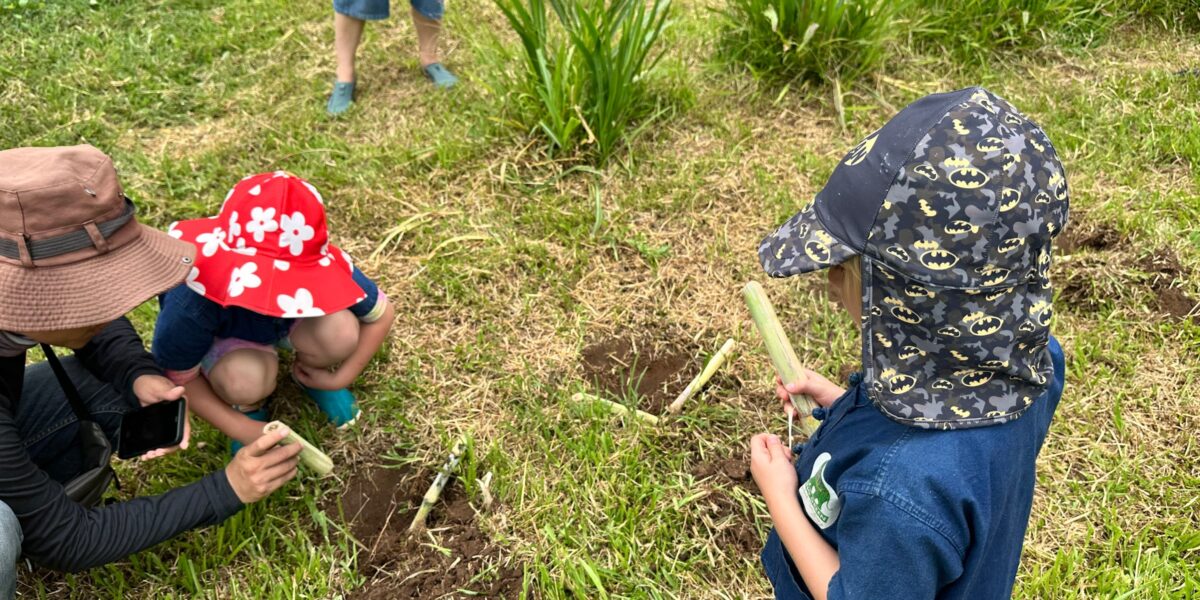
If they are interested in space on a given morning, we want them to be able to go and research it for themselves, listen to an audiobook or pick up a book in the library. We allow them the time and space to absorb the information and do with it what they will. Whether that is half an hour of fact recall on our walk together, using imaginary role play to reinforce the learning by acting out what it would be like in their heads, or creating some Lego structures of a rocket, the beauty is in seeing their eyes light up at discovering something new—something that they are interested in. Learning that has been motivated by them. The beauty is in the freedom.
The Power of Play-Based Learning
As we have tried our best to stand back over the last two years and let the children evolve, we have noticed how they still genuinely are heavily focused on play. Our five-year-old spends most of his time in his own imagination, talking to himself and making sense of the world through the medium of play. Our eight-year-old has also redeveloped an interest, choosing to dip in and out of imaginary games with her brother.
We have seen them re-enact scenes that they have observed through everyday life with us, such as playing taxi drivers, visiting the solicitors, being the estate agent, playing at life. To an outside observer this may look like childish games, but it is clearly an attempt at absorbing what they have seen and trying to understand and make sense of it for themselves. By observing these everyday interactions that occur in society when they are with us all the time, they gain a greater understanding of the realities of life. They watch and observe the adults in their life and then practise it themselves through role play. The UK education system could make us believe that this type of learning is not valuable beyond the reception class, with free play time being dramatically reduced in year one. You cannot standardise or measure free play, like many of life’s most valuable lessons, but that doesn’t lessen their value.
No child is born lazy, and no child is born without a curiosity and desire to learn.
Nurturing Natural Learning Behaviours
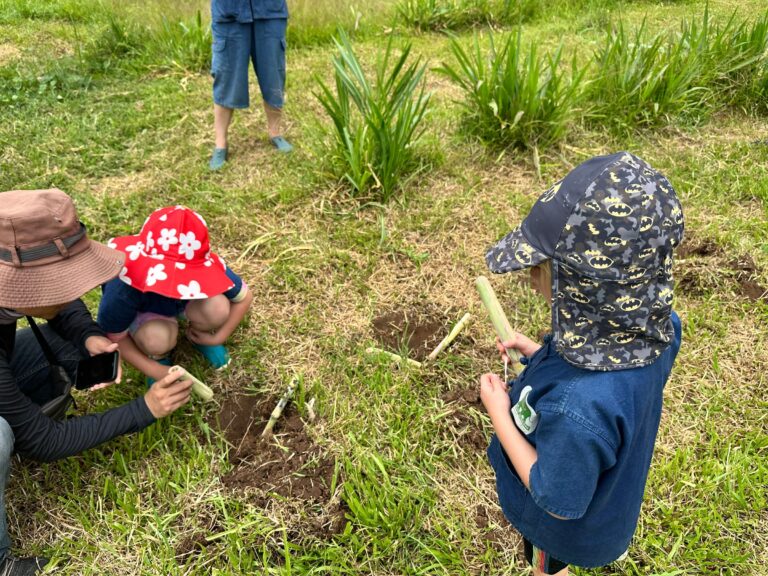
No child is born lazy, and no child is born without a curiosity and desire to learn. You only have to watch a toddler long enough to see their innate curiosity and inner ability to rapidly learn what is being role modelled around them. Learning is about nurturing these behaviours and allowing them to evolve. For us this has meant coming out from behind the school gates, away from the desks, and getting out into nature and the local community. You cannot hope to really understand the world and your place within it without viewing it for yourself.
We are trying to put the onus on developing the innate skills and values that the kids were born with, unique to each of them, to help them to become the best versions of themselves. Life is a continual learning lesson and one that does not stop when we become 18 years old, whether we leave formal education or not. If we foster innate learning behaviours in our children—motivation, determination, curiosity, independence, adaptability, resilience—then they have the capacity to embrace learning for life.
They can learn what they want to, what interests them and fuels their life purpose. As parents or educators, it is not for us to try to dictate that to them, to say that we know them better than they know themselves. Given time, space, nurturing and guided self-development, we have to trust that the children will learn and grow in the way that is right for them. If it doesn’t prove to be “right”, then they will learn and grow again from the lesson. At the end of the day, that is what life is about, is it not?
Frequently Asked Questions
We understand this guilt deeply. We’ve met families around the world who sacrifice everything for their children’s education, and it initially made us question our decision. However, we’ve learned that recognising our privilege doesn’t mean we have to accept a system that doesn’t serve our children. Instead, we use our privilege responsibly by giving our children diverse cultural experiences and teaching them about inequality in the world. The guilt transformed into gratitude and responsibility to use our advantages wisely.
We both succeeded within the traditional system – one through academic achievement, the other through confidence building. But success within a system doesn’t mean that system is right for everyone or optimal for future generations. We can acknowledge what worked for us while recognising that the world has changed dramatically. The skills needed for an AI-driven future are different from what schools currently teach. It’s not hypocritical to want better for our children; it’s evolution.
We found that our rural schools had no ethnic diversity, which limited our children’s worldview just as it had limited ours. Through home education and travel, we expose our children to different cultures, religions, and perspectives firsthand. We encourage conversations with people from all backgrounds and help our children understand their own privileges. You can’t manufacture diversity in a homogeneous area, but you can actively seek out diverse experiences and perspectives.
We believe the key isn’t teaching specific knowledge that will become outdated, but fostering adaptability, curiosity, and resilience. Our approach focuses on how children learn rather than what they learn. We’ve seen firsthand how AI is changing the job market – even traditionally secure roles are at risk. By developing critical thinking, creativity, and the ability to work alongside technology rather than compete with it, we prepare our children for an uncertain but exciting future.
We stepped away from the rigid national curriculum to create something fluid that responds to our children’s interests and our circumstances. Our ‘curriculum’ changes based on where we are and what sparks curiosity. If a child shows interest in space, we follow that thread through books, documentaries, hands-on activities, and real-world connections. We focus on nurturing natural learning behaviours rather than forcing predetermined content. Trust that children are natural learners when given freedom and support.
We’ve observed that even our eight-year-old naturally returned to imaginative play when removed from formal structure. Children often think they need rigid structure because it’s what they’ve known, but play is how they make sense of the world. We’ve watched our children re-enact real-life scenarios – playing taxi driver, estate agent, or solicitor – which is their way of processing and understanding adult interactions. Some children may need more guidance, but the foundation should still honor their natural curiosity and learning style.
We shifted from focusing on what our children know to how they learn. At five and eight, we don’t worry about tests or comparing them to peers. Instead, we cultivate curiosity, motivation, and joy in discovery. Every child is born with an innate desire to learn – you only need to watch a toddler to see this. By providing rich experiences, diverse perspectives, and freedom to explore interests deeply, we trust that they’ll develop the skills and knowledge they need. Learning doesn’t stop at 18; we’re teaching them to be lifelong learners.