
In the UK, you are not currently legally obligated to inform the school or the local authority that you are going to start home educating your child. Seemingly, your child can attend school one day and then not show up the next, without any legal requirement for the parent to inform the school or the authorities of their intentions. Quite how this works in practice I cannot imagine, given that absence due to sickness or holidays is heavily policed by the schools. I hope that parents mostly choose to do the polite thing and inform the school of both their intentions and their reasoning.
As parents who were nervous about our decision-making and desperately looking for external validation that we weren’t going to harm our children with our decision, we chose to inform the school in writing. The headteacher was generous with her advice and words of comfort and wisdom in a follow-up phone call, having had experience with other families who had also de-registered their children. We were given what was called a “cooling-off period” of two weeks, during which the kids could go back into school, no questions asked. It suggested to us that many families made the decision but panicked and backtracked on it when the gravity of their decision sunk in.
The Reality of Leaving the System
And that was it. We were on our own. We had gone from having a child in full-time education, like all of our friends and local community network, to a child at home with us full-time, sitting on the fringes of society. We couldn’t help but laugh at the situation—how enormous the decision had felt but how simple the process had been. We couldn’t get our heads around the fact that two weeks prior we had been given a red card and black mark against our names for taking the kids out of school for three days to visit London. We saw the historic sights, visited the science museum, and went to see a theatre show—all very educational. But when we wanted to remove her from school permanently, there was no one there to check up on us.
We were waved on our merry way. The authorities failed to reply to the written notice we had sent them until nine months later. We had been lost in the system.
When you start to swim upstream in life, you realise just how lonely it can feel.
Swimming Against the Current
To say we panicked a little is an understatement. We knew the decision had felt right. We knew we wanted this to work, but we had never felt more alone. When you start to swim upstream in life, you realise just how lonely it can feel. We have been conditioned to fear the abnormal, the different, and we realised in this one decision how we had put ourselves on the periphery of normal. Everyone in our lives was following the rules of society, and suddenly we were the rebels saying the norm wasn’t good enough for us.
I have never been a rebellious type, and it felt deeply uncomfortable. I spent my energy trying to convince others of the validity of my decision, the reasons, the benefits. I provided evidence of others who had home educated successfully. But I was left disappointed when people couldn’t understand. I had threatened what they knew to be right, and they couldn’t get on board with it.
I can see now that the need for external support and validation was me panicking about the decision and its implications. I was questioning my gut instincts because the outside world was yet again making me feel like it was wrong. Stubbornness is a characteristic that both Jimmy and I possess in spades, and it was that which made us continue. That, and the strength that came from us making this decision together for our family, a decision that felt instinctively right to us.
As much as this new circumstance was difficult to adjust to, we wanted more than ever to prove others wrong and to show that we could make it work. Going back was not an option for us, because that wasn’t working either. So, finding a path forward was the only option. Those first few weeks and months of life without school were challenging, difficult in so many ways, but also extremely enlightening. We learned so much about ourselves, the children, and the other people in our lives. We felt like we were living intentionally, growing, and opening new opportunities that did not exist before.
Figuring Out What Home Education Actually Looks Like
Home education poses a tricky conundrum. Once you decide to leave the school system, for whatever reasons that are personal to you, you are faced with the question of what home education actually looks like. When we withdrew the kids, we knew that school in its current format no longer fitted with our life goals, our family ethos, and our desires for the kids. We could have waited until we had figured out how we were going to deliver education at home before withdrawing, but we needed to strike whilst the iron was hot. Quite frankly, I don’t think we would ever have got it right first time, even if we had given it all the time and research in the world. As with most things, you learn as you go along, particularly from your mistakes.
On the days when we relaxed and let the learning take place with more organic activities such as cooking or explorations in nature, it all felt so good and re-informed us how life-changing this decision could be.
The Deschooling Journey
People in the home educating world often talk of the de-schooling or un-schooling period. A period of time, usually proportional to the amount of time spent within school, where you start to unlearn all of the beliefs and attitudes towards education that have been conditioned in all of us over time. We went through a long de-schooling process, and to some extent are still uncovering new truths two years later. Not so much the children, but more Jimmy and I, who had spent many years within the UK academic system.
I am not a teacher and may not be an authority on the subject, but I am a product of the well-oiled machine. As someone who has an integrated master’s degree (a four-year MPharm) and a postgraduate master’s, I am well versed in the “system” whose sole focus is on academic achievement measured against that of your peers.
Not understanding how deeply this conditioning went, I set out by trying to emulate my own learning from school in the early days of home educating. We gathered textbooks, classroom resources, and tested online learning apps, with the intention of following the national curriculum as a guide of what the kids needed to know. This had me sitting with them completing maths sheets, using counters, discussing science, setting written projects, and generally stressing about what we were missing.
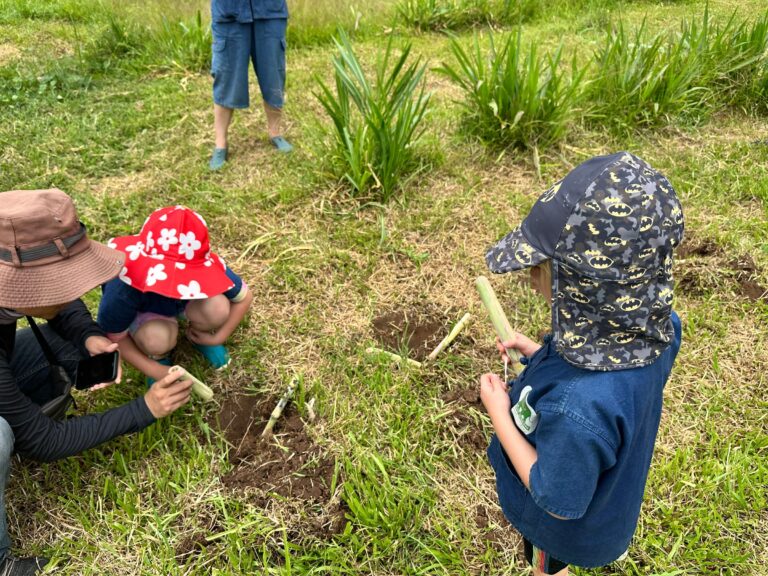
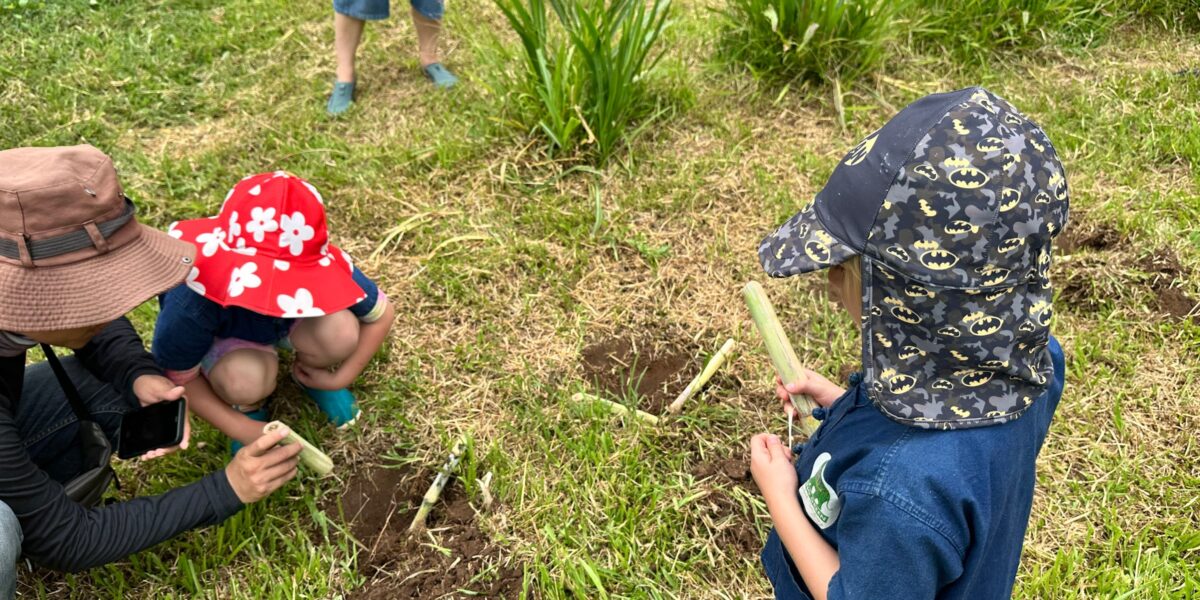
Lack of confidence in our decision meant that we forgot all of the good reasons that we wanted to move away from the school system in the first place. In particular, we forgot the fact that we didn’t actually feel the curriculum was even particularly relevant anymore. The days when we all tried to sit and focus on “school learning” were the same days we all ended up frustrated and impatient with each other. On the days when we relaxed and let the learning take place with more organic activities such as cooking or explorations in nature, it all felt so good and re-informed us how life-changing this decision could be.
Redefining Success and Measuring What Matters
We jumped in headfirst in those first few weeks and months, with a strong desire to get it right, to do it perfectly. We were frightened of under-delivering and “failing” the kids. The thing you quickly realise, however, is that there is no immediate measure of success. No one is watching, and no one is measuring. Until you screw up, of course. As with most of parenting, you don’t know whether you have done it right until you release your baby out into the world at the age of 18. And what measure of success do you choose?
I quickly realised that most of the values celebrated by the current education system were not in alignment with ours. Beyond the periodic table and algebra, who measures how well these young adults can function alone in society? Do they know how to manage a bank account, a house, how to contribute to their local community, or even look after their own wellbeing? Have they honed the characteristics needed to thrive in a challenging job, flourish in a relationship, understand who they are as individuals? I don’t believe school taught me those things, and there is no manual for teaching them as a home educator or parent. But I became increasingly intrigued by how we could go about doing this, now that the slate had been wiped clean.
It took only a matter of weeks before our daughter was free of the headaches, nightmares, tummy aches, general worries, and separation anxiety she had been experiencing whilst at school.
The Transformation and Validation
The journey was absolutely worth the pain. It took only a matter of weeks before our daughter was free of the headaches, nightmares, tummy aches, general worries, and separation anxiety she had been experiencing whilst at school. The speed with which these visible anxiety symptoms dissipated, and her calm, happy, and funny self returned, left us in no doubt about the “rightness” of our decision. At six years old, a relaxed and content child is all that matters. I only had to contend with the guilt of not having made the decision earlier.
As parents, both Jimmy and I found the process of de-registering and de-schooling difficult. But the kids adapted very quickly and smoothly to a different way of life, likely because they hadn’t spent much time proportionally in school. To watch them flourish so readily, to have that quality time with them, and to be guided by their needs, I would do it all over again. The challenge came from managing our own expectations as parents, re-evaluating our beliefs about what education is, and concerning ourselves with the reactions and opinions of others.
This journey has made us stronger as individuals, but also as parents. I feel like I am now truly putting my children first, ahead of anything else. I am not letting what is “normal” dictate the decisions I make. I don’t always make the right decisions, but I do try to challenge my instincts, my inbuilt conditioning, and what is currently considered normal, to learn and grow from what we are doing. Above all, I choose to respect my intuition. This is the guiding light for me, and I now choose to follow it.
Frequently Asked Questions
While you’re not legally required to inform the school or local authority before starting home education, we chose to notify the school in writing. This approach gave us access to supportive advice from the headteacher and a “cooling-off period” where our daughter could return if needed. We’d recommend informing the school as it helps maintain a positive relationship and provides reassurance during this major transition.
We found that deschooling took much longer for us as parents than for our children. The general rule is that it takes about a month for every year spent in school, but we’re still uncovering conditioned beliefs about education two years later. Our daughter adapted quickly because she’d spent relatively little time in school, but we had decades of academic conditioning to unlearn.
We initially tried to replicate school at home with textbooks and curriculum guides, which led to frustration for everyone. The breakthrough came when we relaxed and allowed organic learning through activities like cooking and nature exploration. Expect to feel isolated at first – going against societal norms is challenging, but trust your instincts and give yourself time to find what works for your family.
For us, the transformation was visible within weeks. Our daughter’s anxiety symptoms – headaches, nightmares, tummy aches, and separation anxiety – disappeared rapidly once she left school. We realised there’s no immediate measure of success in home education, which can be unsettling. Focus on your child’s wellbeing and happiness rather than traditional academic benchmarks, and remember that you’re preparing them for life, not just exams.